What Is a Wet Mix Plant and How Does It Improve Road Construction Quality and Efficiency?
Road construction plays a vital role in developing highways, expressways, rural roads, and urban infrastructure. Building durable roads requires properly graded aggregates mixed with the correct quantity of water. A Wet Mix Plant is essential road construction machinery that prepares a uniform mixture for the Wet Mix Macadam (WMM) layer.
A wet mix plant combines different aggregate sizes with a controlled amount of water to produce a consistent mixture. Contractors transport this material to the construction site, spread it with suitable equipment, and compact it to form a strong road base or sub-base according to project specifications.
For contractors and infrastructure developers, selecting the right Wet Mix Plant Manufacturer in India can help improve mixing consistency, minimise material wastage, and support efficient project execution.
This guide explores how a wet mix plant works, its major components, applications, benefits, and key factors to consider when choosing a suitable plant for road construction projects.
What Is a Wet Mix Plant?
A Wet Mix Plant (WMM Plant) is a road construction machine that mixes graded aggregates with water in controlled proportions to produce Wet Mix Macadam material.
Wet Mix Macadam is widely used as a base or sub-base layer in road construction. The mixture must meet the specified aggregate grading and moisture requirements to support proper laying and compaction.
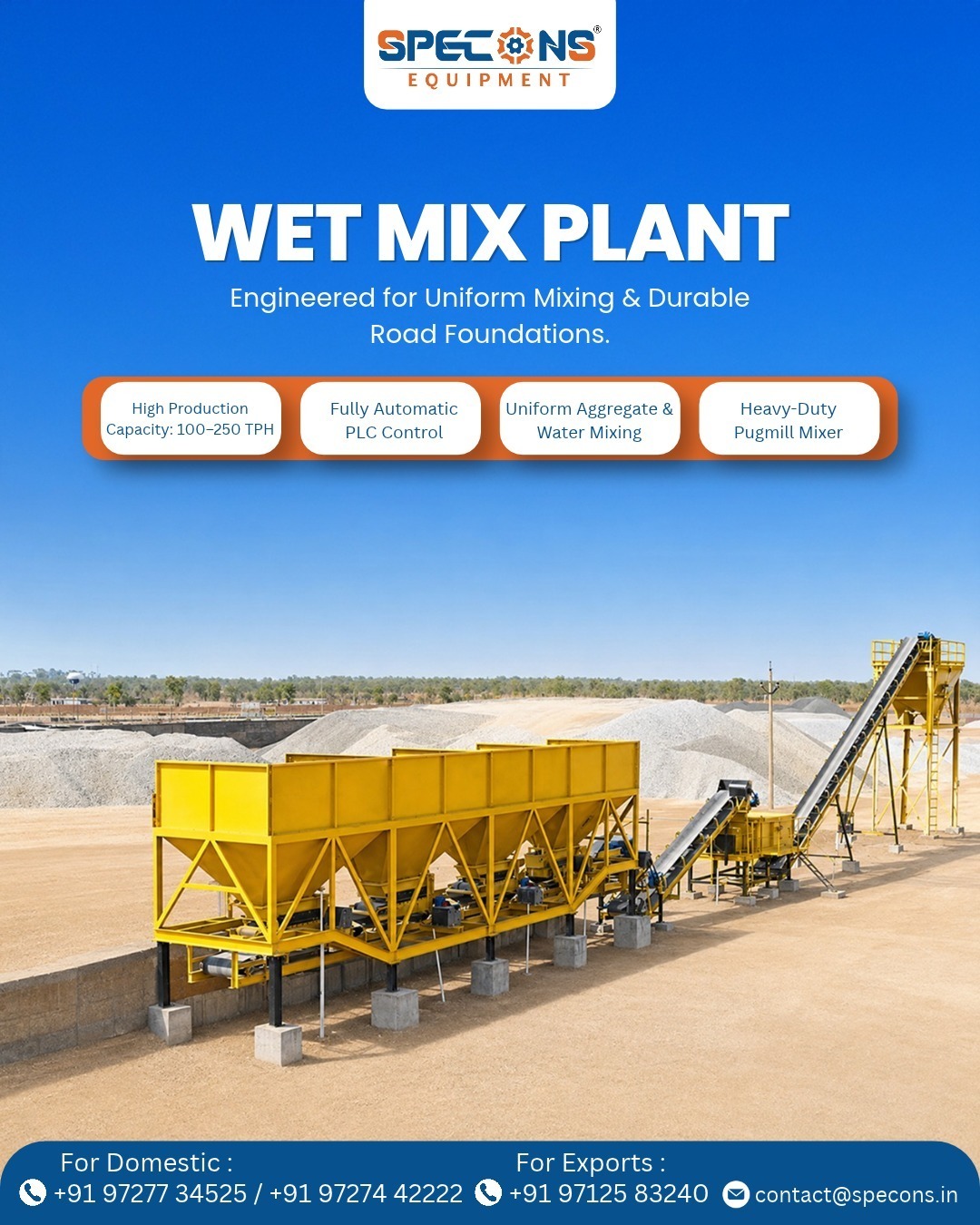
Unlike simple dry aggregate blending, a wet mix plant uses a water dosing system to achieve the required moisture content. Depending on the model, the plant may include multiple aggregate feeders, a conveyor system, a mixing unit, a water supply arrangement, and an automated control panel.
Wet mix plants are commonly used for:
* National and state highway construction
* Expressway and bypass projects
* Rural road development
* Urban roads and municipal infrastructure
* Industrial roads and internal access roads
* Large-scale infrastructure and civil engineering projects
The final quality of the WMM layer depends on aggregate grading, moisture content, mixing uniformity, transportation, laying, and compaction. A properly selected and operated plant helps maintain consistency throughout production.
How Does a Wet Mix Plant Work?
A wet mix plant follows a controlled process to combine aggregates and water into a uniform mixture suitable for road construction.
1. Aggregate Feeding
The plant stores different aggregate sizes or grades in separate bins. Feeders deliver the required quantities into the system according to the specified mix design.
2. Controlled Material Conveying
Conveyor belts transfer the aggregates toward the mixing unit. A properly configured feeding and conveying system supports a steady material flow.
3. Water Dosing
A water dosing system adds water to the aggregate mixture. Adjust the quantity based on the required moisture content, aggregate condition, and approved mix design.
4. Aggregate Mixing
The mixing unit combines aggregates and water to ensure consistent distribution of materials. Uniform mixing is essential to produce WMM that meets project requirements.
5. Material Discharge
The finished mixture is discharged for loading and transportation to the construction site. It is then spread and compacted using appropriate road-construction equipment.
A well-maintained Automatic Wet Mix Plant can help streamline these operations and improve process control, depending on its automation features and configuration.
Major Components of a Wet Mix Plant
Understanding the main components helps contractors evaluate plant performance and maintenance requirements.
Aggregate Feeder Bins
These bins store different aggregate sizes and feed materials into the system in controlled quantities. Their configuration depends on the required aggregate grading and plant design.
Conveyor System
Conveyor belts transport aggregates between the feeding section and the mixing unit. Reliable conveying helps maintain a consistent supply of materials.
Mixing Unit
The mixing unit combines aggregates and water to achieve the required material uniformity. Its design and capacity influence production performance.
Water Dosing System
This system supplies a controlled quantity of water during mixing. Accurate water dosing helps achieve the specified moisture content.
Control Panel
The control panel allows operators to manage plant operations. Depending on the model, it may support automated feeding, water dosing, monitoring, and operational adjustments.
Discharge Arrangement
The discharge system transfers the prepared mixture for loading and transportation to the construction site.
Note: Actual components, automation features, and specifications vary by plant model. Confirm the available configuration with Specons Equipment before selecting a machine.
What Are the Benefits of an Automatic Wet Mix Plant?
An automatic wet mix plant can offer several operational advantages when properly selected, installed, and maintained.
1. Consistent Mixing Quality
Controlled aggregate feeding and water dosing help maintain a uniform mix that meets specifications.
2. Improved Production Efficiency
A suitable plant capacity helps contractors produce WMM at a rate aligned with project demand, reducing delays from insufficient production.
3. Better Material Management
Controlled feeding and mixing can reduce avoidable material losses and improve the use of aggregate and water.
4. Reduced Manual Intervention
Depending on its level of automation, a plant can simplify routine operations and reduce the need for manual adjustments.
5. Support for Large Infrastructure Projects
Wet mix plants suit projects that require regular WMM production, including highways, expressways, and industrial road networks.
6. More Efficient Project Planning
Selecting equipment with the right output capacity and reliable operating systems helps contractors coordinate material production with transportation, laying, and compaction.
These benefits depend on the plant configuration, operator practices, material quality, maintenance, and site conditions.
Wet Mix Plant 100–250 TPH: How to Choose the Right Capacity
Choosing the right production capacity helps balance project requirements, operating costs, and equipment utilisation.
A 100–250 TPH Wet Mix Plant may suit projects with different production requirements, depending on the specific model and its rated output.
Before selecting a capacity, contractors should evaluate the following factors:
- * Project size: Consider the total road length, construction schedule, and daily material requirement.
- * Required output: Estimate the quantity of WMM material needed per hour or shift.
- * Site conditions: Assess available installation space, access roads, power supply, and material storage.
- * Automation requirements: Determine whether manual, semi-automatic, or automatic operation suits the project.
- * Aggregate availability: Consider the grading, moisture, and supply consistency of the available aggregates.
- * Transportation and compaction: Ensure plant output aligns with the capacity of trucks, pavers or graders, and compaction equipment.
- * Maintenance support: Check access to spare parts, technical assistance, and routine servicing.
Rated production capacity does not always equal actual site output. Material characteristics, moisture, operating conditions, and equipment coordination can affect production. Confirm the rated and achievable capacity for the exact model before purchasing.
Applications of Wet Mix Plants in Road Construction
Wet mix plants support a wide range of infrastructure development activities.
Highway and Expressway Construction
High-volume road projects require a steady supply of WMM material. A properly sized plant helps contractors coordinate production with road-laying schedules.
Rural Road Development
Rural road projects need reliable base-layer preparation to support road construction and traffic requirements.
Urban Road Projects
Wet mix plants can support the construction and improvement of city roads, connecting roads, and municipal infrastructure.
Industrial and Commercial Roads
Industrial estates, logistics facilities, warehouses, and commercial developments may require durable access roads designed for their expected traffic loads.
Infrastructure and Civil Engineering Projects
Wet mix plants can be used wherever project specifications call for Wet Mix Macadam in road base or sub-base construction.
Determine the right plant capacity and configuration based on the project design, required material specifications, and production schedule.
How to Select a Reliable Wet Mix Plant Supplier
Choosing the right Wet Mix Plant Supplier is important for equipment performance and long-term project support.
Before finalising a purchase, consider these points:
1. Confirm the specifications: Review the rated capacity, mixing arrangement, feeder configuration, and water dosing system.
2. Evaluate automation: Check the control system and the level of operational monitoring available.
3. Review build quality: Ask about the materials, components, and construction standards used.
4. Understand installation requirements: Confirm the site preparation, foundation, power, and commissioning requirements.
5. Check maintenance support: Ask about spare parts availability, service response, and operator training.
6. Compare total ownership costs: Consider the purchase price, installation, energy consumption, maintenance, and expected operating life.
7. Request technical documentation: Review the equipment specifications, operating instructions, warranty terms, and applicable compliance documents.Working with an experienced supplier can help you evaluate the right equipment for your production requirements. However, always verify the supplier’s actual product range, service capabilities, and technical commitments before placing an order.
Why Consider Specons Equipment for a Wet Mix Plant?
Contact Specons Equipment when evaluating wet mix plant options for road construction applications. Buyers should review the available models and confirm the technical specifications that match their project requirements.
When discussing your requirements with Specons Equipment, ask about:
· Available wet mix plant models and rated capacities
· Options within the 100–250 TPH range, if available
· Aggregate feeder and mixing configurations
· Automatic control and water dosing features
· Installation and commissioning support
· Spare parts, maintenance, and after-sales service
· Quotation, delivery timelines, and warranty terms
Confirm these details directly with the company so that the selected equipment meets your site conditions, project specifications, and budget.
Frequently Asked Questions About Wet Mix Plants
1. What is a wet mix plant used for?
A wet mix plant mixes graded aggregates with a controlled amount of water to produce Wet Mix Macadam for road base and sub-base construction.
2. How does a wet mix plant improve road construction quality?
It helps control aggregate feeding, water dosing, and mixing uniformity. The resulting material must still meet the specified grading, moisture, laying, and compaction requirements to achieve the desired road quality.
3. What is the production capacity of a Wet Mix Plant 100–250 TPH?
The 100–250 TPH range refers to a stated production-capacity range. Actual capacity depends on the manufacturer’s model and operating conditions. Confirm the specific plant's rated output before purchasing.
Keywords