Introduction
Road construction requires specialized equipment to ensure strong, durable, and long-lasting road surfaces. One of the most important machines used in road paving and maintenance is a bitumen sprayer. It sprays hot bitumen or suitable bituminous binders uniformly over prepared road surfaces to improve bonding between pavement layers and support effective road construction.
A bitumen sprayer plays a vital role in highway construction, asphalt paving, road maintenance, and surface treatment projects. By applying the correct amount of bitumen at a controlled rate, the machine creates a consistent coating that supports pavement performance and durability.
Understanding how a bitumen sprayer works, its types, applications, benefits, and maintenance requirements can help contractors select the right equipment for their road construction projects.
What Is a Bitumen Sprayer?
A bitumen sprayer is a road construction machine that applies bitumen or compatible bituminous binder to prepared surfaces. It generally consists of a storage tank, heating system, pump, spray bar or spray lance, nozzles, control system, and supporting vehicle or chassis.
Depending on its design, a bitumen sprayer may be truck-mounted, trailer-mounted, or a smaller portable unit. The machine heats or maintains the binder at the specified application temperature, circulates it through the pumping system, and distributes it across the road surface.
Bitumen sprayers are commonly used for applying prime coats, tack coats, and surface-treatment binders when the selected material and pavement specifications require them.
The primary purpose of a bitumen sprayer is to distribute bitumen uniformly, control application rates, and ensure reliable bonding between pavement layers.
How Does a Bitumen Sprayer Work in Road Construction?
A bitumen sprayer operates through a series of steps that help distribute the binder evenly over the prepared surface.
1. Filling the Bitumen Tank
The process begins by filling the tank with the specified bitumen or bituminous binder. The selected material must be compatible with the machine’s tank, pump, seals, and heating system.
Before filling, operators should verify that the tank is clean and that the equipment is suitable for the intended material.
2. Heating the Bitumen
Many conventional bitumen sprayers use a heating system to maintain the binder within its specified application temperature range. Depending on the equipment, heating may be provided by a burner and heat-transfer arrangement.
Maintaining the correct temperature helps the material achieve suitable flow characteristics for pumping and spraying. The required temperature depends on the binder type and manufacturer recommendations.
3. Pumping the Bitumen
Once the material reaches the required operating conditions, the pump transfers it from the tank through the circulation and distribution system.
A properly functioning pump helps maintain the pressure and flow needed for consistent spraying.
4. Spraying Through Nozzles
The bitumen is distributed through a spray bar fitted with multiple nozzles or, on some machines, through a hand-operated spray lance.
The spray bar applies the binder across the road width, while the nozzle arrangement and machine controls help regulate the distribution pattern and application rate.
5. Controlling the Application Rate
The amount of bitumen applied depends on pump output, vehicle speed, spray width, nozzle configuration, and binder characteristics.
Correct calibration is essential because insufficient application can affect bonding, while excessive application may cause bleeding, slippage, or other pavement defects.
6. Surface Preparation and Follow-Up Work
Before spraying, prepare the road surface according to the specified treatment. This may involve cleaning, removing loose material, and checking that the surface conditions are suitable.
After application, the next construction step depends on the treatment type. For example, a tack coat is typically followed by placing the next asphalt layer, while some surface treatments involve spreading aggregate over the binder.
Following approved construction specifications helps achieve a consistent, durable road surface.
Types of Bitumen Sprayer Machines
Bitumen sprayers come in different types to suit project size, road width, mobility needs, and application requirements.
1. Truck-Mounted Bitumen Sprayer
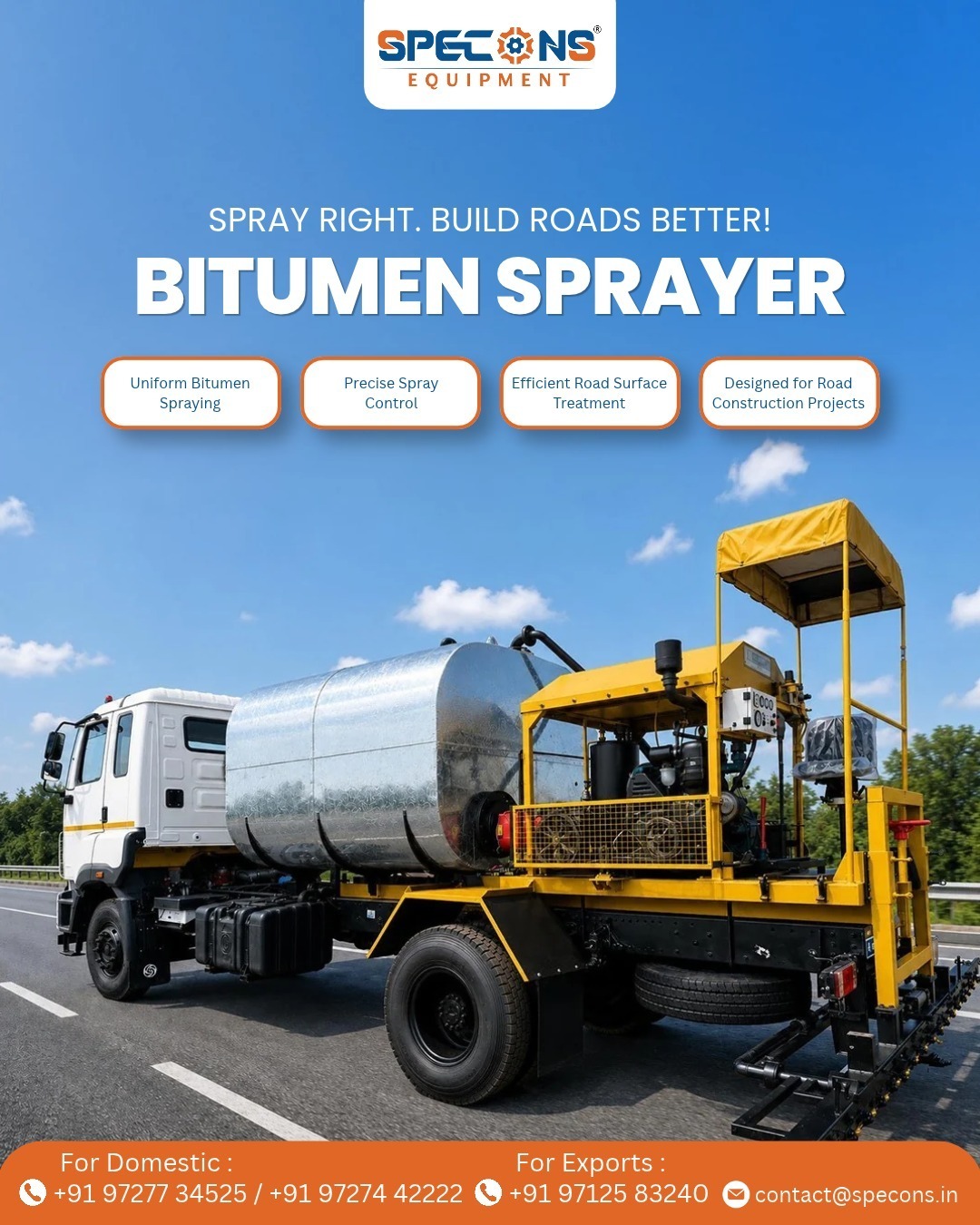
A truck-mounted bitumen sprayer is designed for medium- to large-scale road construction projects. It typically includes a large tank, heating system, pumping equipment, and a full-width spray bar.
Key advantages:
· Suitable for highway and large road projects
· Efficient coverage of wider surfaces
· Integrated transportation and spraying capabilities
· Suitable for repeated applications over extended road sections
2. Trailer-Mounted Bitumen Sprayer
A trailer-mounted bitumen sprayer is towed by a suitable vehicle. It provides mobility while allowing contractors to use an existing towing vehicle.
Key advantages:
· Flexible transportation between job sites
· Suitable for selected medium-sized projects
· Available in different tank capacities and configurations
· Can be a practical option for contractors who do not require a dedicated spraying truck
3. Portable Bitumen Sprayer
Portable bitumen sprayers are designed for smaller-scale applications, patch repairs, and selected maintenance tasks. Their capacity and output are generally lower than those of larger truck-mounted systems.
Key advantages:
· Suitable for localized road maintenance
· Convenient for selected repair applications
· Easier to position in restricted work areas
· Useful where large spraying equipment may be impractical
4. Manual and Automatic Bitumen Sprayers
Manual and automatic systems differ in how they operate and are controlled. Manual systems may rely on operator-controlled spray lances or mechanical adjustments, while automatic systems may use controls to regulate spraying parameters.
The appropriate option depends on required coverage, application accuracy, workforce availability, and project specifications.
Main Components of a Bitumen Sprayer
Understanding a bitumen sprayer's main components helps contractors evaluate equipment quality and maintenance needs.
Bitumen Storage Tank
The tank stores the bituminous binder and is designed to accommodate the machine's specified operating temperature and material characteristics.
Heating System
The heating system maintains the binder at the required temperature for circulation and application. Proper temperature control is essential for reliable operation.
Bitumen Pump
The pump moves the binder through the system and supplies it to the spray bar or spray lance at the required flow rate.
Spray Bar and Nozzles
The spray bar distributes bitumen across the working width. Correct nozzle selection, spacing, alignment, and maintenance help achieve uniform coverage.
Circulation System
The circulation system helps move the binder through the machine and may support temperature consistency and operational readiness, depending on the design.
Control Panel
The control system lets the operator monitor or adjust key operating parameters, such as temperature, pump operation, and spraying functions.
Chassis or Vehicle
The chassis, trailer, or truck provides mobility and supports the machine’s major components.
Applications of Bitumen Sprayers in Road Construction
Bitumen sprayers are used in a variety of road-building and pavement-maintenance operations.
· Prime coat application: Applying a suitable bituminous material to a prepared granular base when required by the pavement design.
· Tack coat application: Applying a thin layer of compatible binder to promote adhesion between existing and new asphalt layers.
· Surface dressing: Distributing binder before aggregate application in suitable surface-treatment projects.
· Road maintenance: Supporting selected pavement repairs, resurfacing, and rehabilitation work.
· Highway construction: Applying bituminous binders over long road sections according to project specifications.
· Parking areas and access roads: Preparing surfaces for asphalt paving and other specified bituminous treatments.
· Rural road construction: Supporting road surfacing and maintenance projects that require bituminous spraying.
Select the binder type and application method based on surface condition, climate, pavement design, and applicable construction standards.
Benefits of Using a Bitumen Sprayer Machine
Using a suitable bitumen sprayer can improve the efficiency and consistency of road construction operations.
1. Uniform Bitumen Application
A properly calibrated spray system helps distribute the binder evenly across the required surface width, reducing inconsistent coverage.
2. Improved Pavement Bonding
Correctly applied prime and tack coats can improve the interface between pavement layers when specified for the project.
3. Increased Work Efficiency
Mechanical spraying lets contractors cover larger areas more efficiently than many manual methods.
4. Controlled Material Consumption
Accurate calibration helps contractors apply the required binder quantity and reduce unnecessary material use.
5. Reduced Manual Work
Spray bars and automated controls can reduce repetitive manual application and support more consistent operating practices.
6. Better Productivity on Large Projects
Truck-mounted and other high-capacity systems can help contractors maintain a steady workflow on highways and large road construction sites.
7. Support for Road Maintenance
Appropriately sized sprayers allow contractors to carry out selected repair, resurfacing, and surface-treatment operations efficiently.
The actual benefits depend on equipment condition, operator training, calibration, and compliance with project specifications.
How to Choose the Right Bitumen Sprayer
Selecting the right bitumen sprayer machine is important for achieving the required application quality and project productivity.
Consider the following factors before purchasing:
· Tank capacity: Choose a capacity suited to the size and duration of your road construction projects.
· Spray width: Ensure the spray bar can cover the required road width.
· Application rate: Verify that the machine can deliver the specified binder quantity per unit area.
· Heating capacity: Check whether the heating system can maintain the required operating temperature for the selected binder.
· Pump performance: Evaluate the pump’s flow range and suitability for the material.
· Nozzle configuration: Review nozzle spacing, spray pattern, adjustment options, and ease of cleaning.
· Vehicle or trailer design: Consider site accessibility, transportation requirements, and road conditions.
· Control system: Choose a control arrangement that supports accurate operation and monitoring.
· Maintenance and spare parts: Check the availability of technical support, replacement components, and servicing.
· Manufacturer reliability: Evaluate equipment quality, documentation, warranty conditions, and after-sales service.
A detailed comparison of these factors can help contractors select equipment that meets their technical and budget requirements.
Maintenance Tips for a Bitumen Sprayer
Regular maintenance helps preserve spraying accuracy, reduce equipment downtime, and improve operational reliability.
1. Inspect the tank: Check for leaks, damage, and signs of corrosion.
2. Monitor the heating system: Inspect burners, temperature controls, and related components according to the manufacturer’s schedule.
3. Check pump performance: Look for unusual noise, leakage, pressure fluctuations, or reduced flow.
4. Clean spray nozzles: Remove blockages and inspect nozzle wear to maintain a consistent spray pattern.
5. Inspect hoses and connections: Check for damage, leakage, and loose fittings.
6. Verify temperature readings: Ensure monitoring instruments are functioning correctly.
7. Check the spray bar: Inspect alignment and nozzle spacing before starting work.
8. Follow the service schedule: Maintain the machine according to the manufacturer’s operating instructions.
Because bitumen can be extremely hot, only trained personnel should perform maintenance using appropriate protective equipment and approved procedures. Before opening, cleaning, or servicing pressurized or heated components, isolate the equipment and ensure it is safe.
Safety Precautions When Operating a Bitumen Sprayer
Bitumen spraying involves heat, moving machinery, traffic, and potentially hazardous fumes or vapors. Appropriate precautions are essential.
· Wear suitable heat-resistant protective clothing, gloves, eye protection, and other required PPE.
· Keep unauthorized personnel away from the spraying area.
· Check the spray system, hoses, and connections before operation.
· Follow the specified temperature and pressure limits.
· Use appropriate traffic management and work-zone warning systems.
· Avoid contact with hot bitumen, which can cause severe burns.
· Follow the material safety data sheet and manufacturer instructions.
· Operate heating equipment according to approved fire-prevention procedures.
· Never clear a blocked nozzle or repair a pressurized line while the system is operating.
Safe operating procedures help protect workers and support uninterrupted construction activities.
Frequently Asked Questions (FAQs)
1. What is a bitumen sprayer used for?
A bitumen sprayer applies bitumen or a compatible bituminous binder to prepared road surfaces. Common applications include prime coats, tack coats, surface dressing, and selected road maintenance operations.
2. How does a bitumen sprayer work?
The machine stores the binder in a tank, heats it to the required temperature, pumps it through the distribution system, and sprays it through nozzles or a spray lance at a controlled application rate.
3. What are the different types of bitumen sprayers?
Common configurations include truck-mounted, trailer-mounted, and portable bitumen sprayers. Some equipment also features manual or automated controls, depending on the design.
Keywords