How Can an Asphalt Drum Mix Plant Improve Road Construction Efficiency and Asphalt Production Quality?
Road construction projects require consistent asphalt quality, efficient material mixing, and reliable production capacity. An Asphalt Drum Mix Plant plays a key role in producing hot-mix asphalt for highways, city roads, industrial roads, and infrastructure development projects.
For road construction contractors, selecting the right Asphalt Mixing Plant can make a significant difference in production efficiency, material utilization, and project execution. A modern plant combines aggregates, bitumen, and filler materials through a continuous heating and mixing process to produce a consistent asphalt mixture.
Specons Equipment provides road construction machinery solutions designed to meet different project and production requirements. Whether you are looking for a 25 TPH Asphalt Plant, a 150 TPH Asphalt Plant, or an Automatic Asphalt Plant, choosing the right machinery is essential for reliable asphalt production.
What Is an Asphalt Drum Mix Plant?
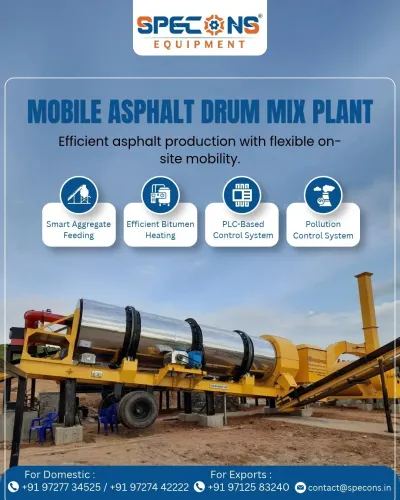
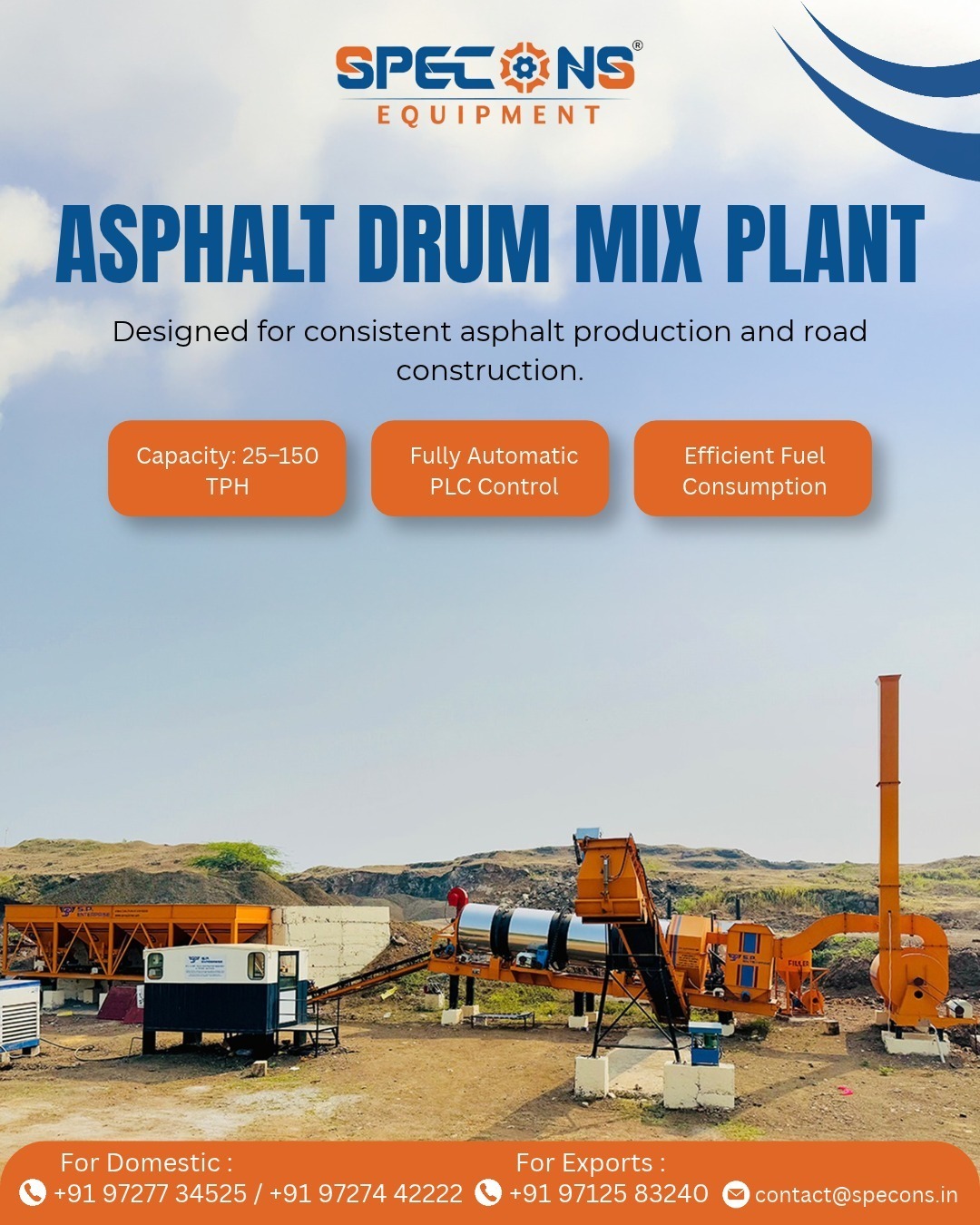
An Asphalt Drum Mix Plant is industrial road construction equipment used to manufacture hot mix asphalt by continuously drying, heating, and mixing aggregates with bitumen.
Unlike batch mix plants, which produce asphalt in separate batches, a continuous asphalt drum mix plant heats and mixes materials through a continuous production process.
The major components generally include:
· Cold aggregate feeder system
· Aggregate conveyor arrangement
· Drying and mixing drum
· Industrial burner system
· Bitumen storage and supply system
· Mineral filler feeding arrangement
· Dust collection system
· Control panel and operating system
These components work together to support continuous asphalt manufacturing for different road construction applications.
How Does an Asphalt Drum Mix Plant Improve Road Construction Efficiency?
A modern Hot Mix Asphalt Plant offers several operational advantages for infrastructure developers and road construction contractors.
1. Continuous Asphalt Production
A continuous production arrangement helps contractors maintain a steady supply of hot mix asphalt. This is particularly useful for highway construction, large road projects, and infrastructure development.
2. Consistent Asphalt Mixing Quality
The plant combines heated aggregates with bitumen to produce a uniform mixture. Proper material feeding and mixing help maintain consistency throughout production.
3. Efficient Aggregate Heating and Drying
The drying drum removes moisture from aggregates and heats them before mixing. Proper aggregate heating is important for achieving the required asphalt quality.
4. Better Material Utilization
Controlled aggregate feeding and bitumen supply help maintain material proportions. This supports efficient resource utilization and helps minimize unnecessary material wastage.
5. Convenient Operational Control
An Automatic Asphalt Plant can incorporate control systems that help operators monitor feeding, heating, and production operations. The level of automation depends on the selected plant configuration.
6. Suitable for Different Infrastructure Projects
An Asphalt Drum Mix Plant is suitable for producing hot-mix asphalt for highways, urban roads, industrial roads, and other infrastructure development projects.
What Are the Main Components of an Asphalt Drum Mix Plant?
Understanding the main components helps buyers evaluate the right Asphalt Mixing Plant for their production requirements.
Cold Aggregate Feeder
Stores and supplies aggregates of different sizes in controlled quantities to maintain the required material proportions.
Aggregate Conveyor System
Transfers aggregates from the feeder arrangement to the drying and mixing drum.
Drying and Mixing Drum
The drum dries, heats, and mixes aggregates with bitumen as part of the continuous production process.
Burner System
Provides the heat required to dry and heat aggregates during asphalt manufacturing.
Bitumen Storage and Supply System
Stores and supplies heated bitumen for mixing with aggregates.
Dust Collection System
Helps collect dust generated during aggregate processing and supports pollution control requirements.
Control Panel
Allows operators to monitor and manage plant operations according to the installed control system.
Which Asphalt Plant Capacity Is Suitable for Your Project?
Selecting the right production capacity is an important consideration when investing in road construction machinery.
25 TPH Asphalt Plant
A 25 TPH Asphalt Plant can be considered for smaller road construction projects and operations with comparatively lower asphalt production requirements.
It may be suitable for:
· Local road construction
· Small infrastructure projects
· Road repair and maintenance
· Projects with moderate asphalt requirements
150 TPH Asphalt Plant
A 150 TPH Asphalt Plant is designed for higher production requirements and can be considered for large-scale infrastructure and road construction operations.
It may be suitable for:
· Highway development projects
· Large infrastructure contracts
· Industrial road construction
· High-volume asphalt production requirements
The right plant selection depends on project size, operating conditions, production demand, and the manufacturer’s technical specifications.
What Are the Applications of Asphalt Drum Mix Plants?
An Asphalt Drum Mix Plant is widely used across different infrastructure and road development sectors.
· Highway Construction: Producing hot-mix asphalt for national and state highways.
· Urban Road Development: Manufacturing asphalt for city roads, streets, and transportation networks.
· Airport Pavement Projects: Supplying asphalt mixtures for suitable airport pavement applications.
· Industrial Roads: Supporting road development in industrial parks and manufacturing facilities.
· Road Maintenance: Producing asphalt for resurfacing, rehabilitation, and repair work.
· Infrastructure Development: Supporting transportation and connectivity projects.
How to Choose the Right Asphalt Drum Mix Plant Manufacturer?
Choosing a reliable Asphalt Drum Mix Plant Manufacturer is an important decision for contractors and infrastructure companies.
Before purchasing, evaluate the following factors:
· Production Capacity: Select a capacity that matches your daily asphalt requirements.
· Fuel Efficiency: Evaluate burner performance and fuel consumption.
· Automation: Consider the required level of automatic operation and process control.
· Aggregate Feeding: Check the feeder configuration and material handling arrangement.
· Bitumen System: Evaluate bitumen storage, heating, and supply arrangements.
· Dust Collection: Check the dust collection system and applicable environmental requirements.
· Installation: Consider site requirements, foundation, transportation, and installation.
· Maintenance: Evaluate servicing requirements, spare parts, and technical support.
Selecting the right Road Construction Machinery supplier can help businesses make a suitable long-term equipment investment.
Why Choose Specons Equipment for Asphalt Mixing Plant Requirements?
Choosing the right machinery supplier is essential for road construction businesses looking for dependable asphalt production solutions.
Specons Equipment focuses on road construction machinery and helps customers evaluate equipment based on their project applications and production needs.
When selecting an Asphalt Drum Mix Plant, buyers should consider:
· Production capacity requirements
· Project size and application
· Plant configuration
· Operational convenience
· Material handling requirements
· Maintenance and service support
Whether you are evaluating a 25 TPH or 150 TPH configuration, discuss your production requirements before selecting an Automatic Asphalt Plant.
Frequently Asked Questions (FAQs)
Q1. What is an Asphalt Drum Mix Plant used for?
An Asphalt Drum Mix Plant is used to manufacture hot mix asphalt by heating and mixing aggregates with bitumen. The produced material is commonly used in highway construction, road development, and infrastructure projects.
Q2. How does an Asphalt Mixing Plant work?
An Asphalt Mixing Plant feeds aggregates into a drying and mixing drum, where they are heated and combined with bitumen to produce hot mix asphalt through a continuous process.
Q3. What is the difference between a drum mix plant and a batch mix plant?
A drum mix plant produces asphalt continuously, whereas a batch mix plant produces asphalt in separate batches through individual mixing cycles.
Keywords